

BY SHALEEN DESTEFANO
If you’ve ever looked at your child or teen and thought, Something’s going on, but I have no idea what to do about it, you’re not alone. We know by now that parenting doesn’t come with a handbook, and kids don’t always have the words, or the willingness, to tell us what’s happening beneath the surface. That’s where Christine of Little Owl Counseling comes in; she has skillfully created a space where children and teens can work through the hard stuff in a way that feels safe, approachable, and, yes, even playful. Because sometimes the path to healing doesn’t start with talking, it starts with feeling understood.
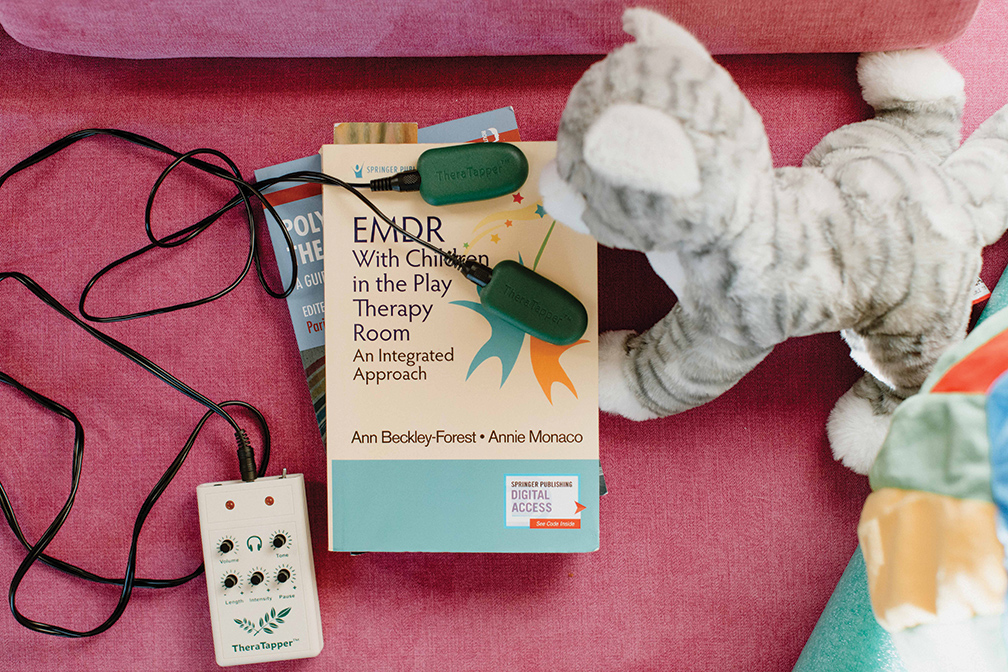 What first drew you to working with children and teens, and was there a moment along the way when you knew, “This is the work I’m meant to be doing?”
What first drew me to working with children and teens is that they’re such a vulnerable population, and I believe deeply that they deserve the opportunity to process hard things when they happen, not years later. Once I began doing EMDR work with children, I never looked back. It’s such a powerful, evidence-based approach to help kids and teens get unstuck from traumatic or high-stress experiences and build resilience for the future. Kids and teens experience big feelings, and if those feelings aren’t processed, they can get in the way of growing, learning, and thriving. There’s a special window of opportunity to help a child get unstuck early.
You have a thoughtful philosophy that “underneath every challenging behavior, there is a need.” What does that look like, and how can parents begin to look at their child’s behavior differently?
Underneath every behavior, there’s an attachment need, because we’re wired from birth to be in relationships. A child communicates through their behavior, especially before they have the words to express themselves the way an adult would. I encourage parents to reframe the question: instead of reacting to the behavior, get curious and ask what need is this behavior signaling? Protection, comfort, delight, emotional organization, presence? The behavior isn’t the problem to fix; it’s a clue pointing to something deeper.
That shift from “How do I stop this behavior?” to “What is really going on inside my child right now?” – changes everything. It moves parents from managing behavior to understanding their child and building bridges to their inner world.
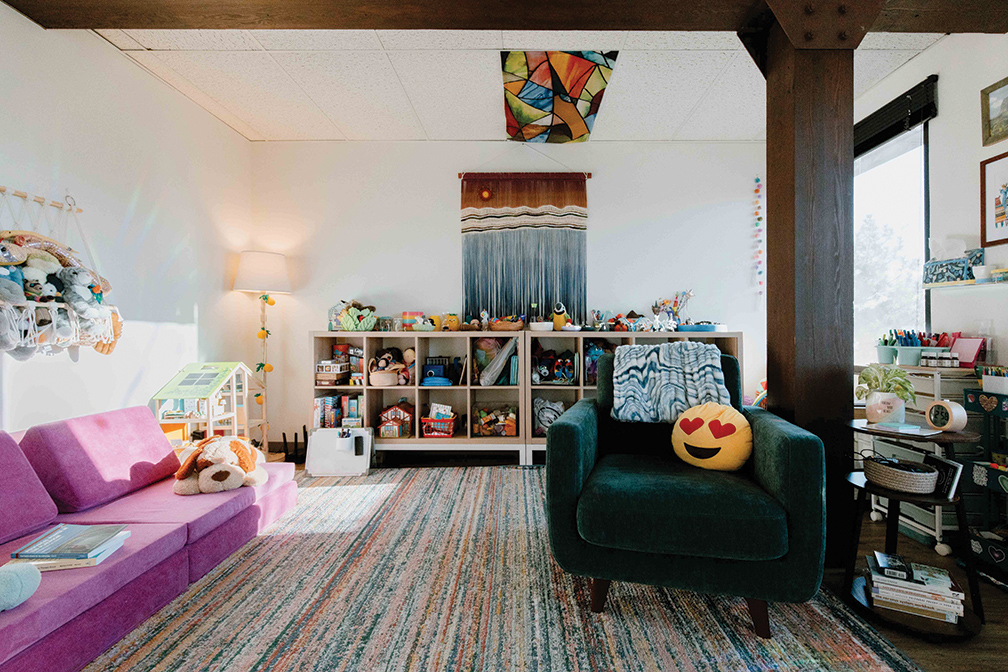 Your approach to trauma therapy is intentionally playful. What does “play” make possible that traditional talk therapy sometimes can’t?
Play, and expressive work more broadly, is the language of children and teens, even if it looks different depending on age. I take a bottom-up approach rather than a top-down one, working with the body and senses first, not just words. For younger children, that might mean the dollhouse, the sand tray, puppets, or drawing. For teens, it might look more like making slime, art, or music, whatever outlet lets them safely and slowly approach the hard material. A lot of what kids and teens experience happens pre-verbally, before they have the language to fully describe it. I take the pressure off of having to ‘talk it out.’ The toys and objects in my therapy room are intentionally chosen to help bring to light what happened before they had the words for it, giving them another way in.
Parents often feel helpless when their child is struggling. What do you wish more parents understood about their own role in their child’s emotional regulation, and about giving themselves some grace along the way?
I firmly believe every parent is doing the best they can, and every parent deserves support. Kids don’t come with a manual; parenting is a process of discovering what each child specifically needs. One thing I remind parents of, as a Circle of Security Facilitator, is that blame is a dead-end street. What matters more is a parent’s own capacity to navigate their own regulation, because that directly impacts the child. When there’s a strong, sturdy leader in the home – someone who can stay curious, stay connected, and repair when there’s inevitable rupture – that steadiness flows down to the child, like a waterfall.
I talk with parents about three core roles from my training in TraumaPlay: a safe boss, who creates order and safety and knows when to use their power and when to share it; a nurturer, who provides comfort and soothing; and a story keeper, a compassionate witness who holds a child’s good and hard stories. The goal is never perfection but patience, with yourself and your child. As Dr. Dan Siegel writes in The Power of Showing Up, (a great read) so much of this work comes down to showing up for your child, again and again.
 You work with children as young as four through young adults, which means you’re meeting people at very different stages of development. What have you learned about how differently kids and teenagers experience and communicate difficult emotions?
My work meets every child or teen exactly where they are. There’s always an invitation to choose something in the room, whether that’s an object, an activity, or simply imagining together. I orient to the child in front of me, not a one-size-fits-all approach, because I’m trained to work across that whole developmental range, from young children through teens. What I love about EMDR is that it’s an evidence-based roadmap that still leaves room for creative expression, structure and safety, along with the freedom to show up and express themselves however feels natural.
You came to counseling with a background in media, culture and communications before earning your master’s in clinical mental health counseling. How has that earlier part of your life shaped the therapist you are today?
Storytelling has always been at the center of my work. Before becoming a therapist, that looked like a career in communications – learning to listen, to write, to understand many perspectives, to approach conflict with curiosity. Now I do that same work through a different lens, but with the same presence. Children are no different. They’re embedded in larger stories and contexts of their own. Their families, schools, culture, friendships, communities, histories all matter to the work we do together. My background taught me to hold space for the whole story, not just the presenting problem.
What is one thing you wish every parent knew before bringing their child to therapy, especially a parent who may be wondering, “Is this really serious enough to seek help?”
Trauma isn’t really about what happened. It’s about how a child’s body and mind were able to respond to it. When an experience overwhelms a child before they can process it, it gets stuck. I often use the analogy of a bee sting: with EMDR, we help take out the stinger and reduce the activation around it. The memory is still there, but it’s no longer as ‘loud’ or activated as it once was.
My wish is for parents to know that seeking help is not shameful, it’s an opportunity for a child to get unstuck, foster healthy development, and strengthen what’s already good. Therapy isn’t only for crisis; it can make the good stuff feel even better, and it’s education for the whole family system, parent and child together.
When you think about successful therapy, what does progress actually look like? Is it a big breakthrough, or are there smaller, quieter moments that tell you a child is beginning to heal?
Progress in therapy rarely looks like a lightning-bolt moment. More often, it’s a parent telling me their kid slept through the night for the first time in weeks, or didn’t melt down at drop-off. Or it’s a teen sharing they woke up without that familiar dread, or that they tried out for the soccer team. Those small shifts are the real signal, the anxiety, the panic, the avoidance start to fade, because a kid or teen no longer needs those defenses once the memory is processed.
What we’re really working toward is helping them stop living in trauma time and re-orient to the present, returning to their developmental age, building confidence and competence along the way. Progress looks like getting their needs met and experiencing safety, internally and externally. Because healing was never meant to happen alone, it happens in relationship.
To learn more about Christine Choucair, LPC, visit https://www.thelittleowlcounseling.com or call her at 720-805-8152. Her inviting space is located right here in Wash Park at 1221 S. Clarkson Street.