
BY SHALEEN DESTEFANO
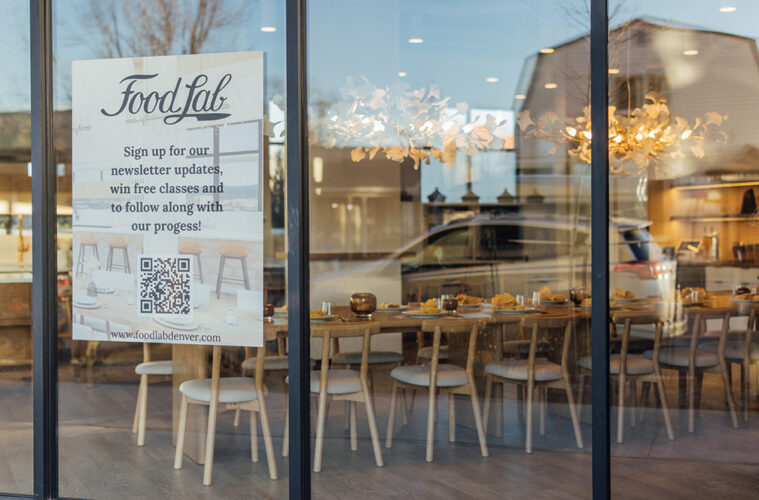
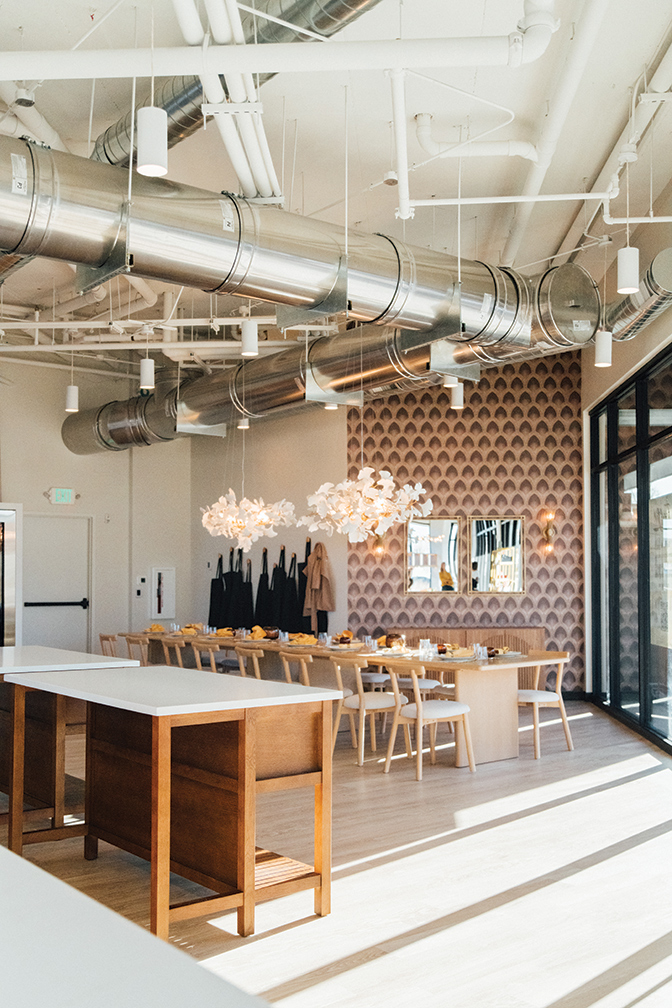
When you step inside the gorgeous space beyond the Food Lab doors, you know you’re about to take part in something special, and cooking is just the starting point. Founder and visionary Casey Easton has created a space where both adults and children can build confidence in the kitchen while connecting directly with their community. When we first met Casey, we were overwhelmed by her passion. She built something incredible and we are so lucky to have her vision come to life right here in the neighborhood. She sat down with us to share her story of how she worked tirelessly to make this dream a reality.
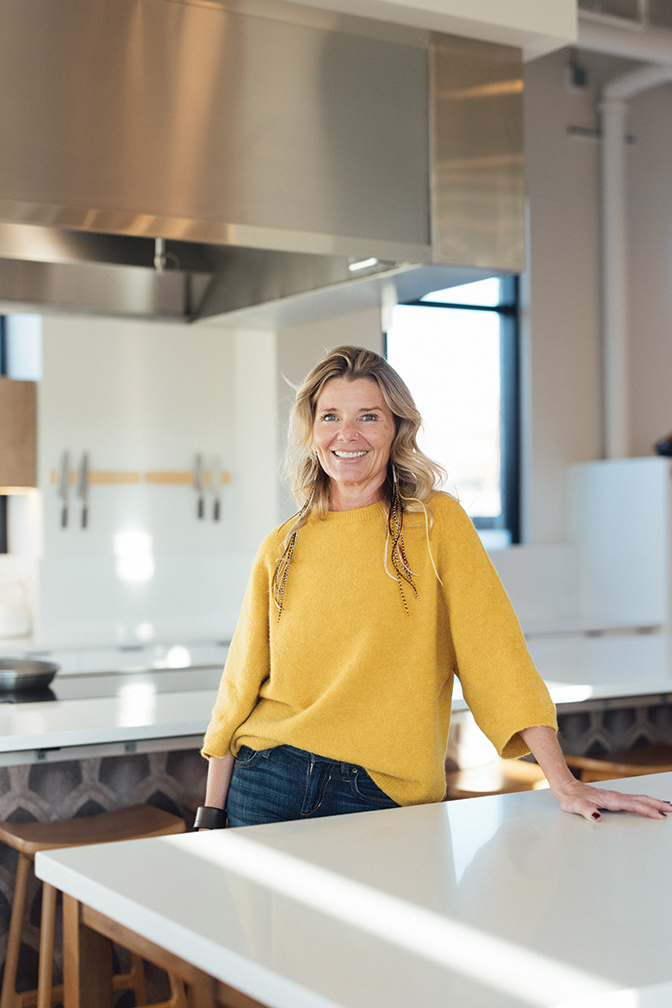 You’ve created something that feels less like a business and more like a shared experience. When do you personally feel most proud inside the space?
I think I feel most proud when I see the that there are jobs being created for people, a welcoming space for guests and employees and when I run into guests outside the space and they tell me what a great time they had and how they have cooked something from a menu or met up with people they met in class. That’s the win. Its about how people feel in Food Lab.
Food Lab makes people feel like “the hero in the kitchen,” what do you think people are actually gaining beyond cooking skills when they walk through your doors?
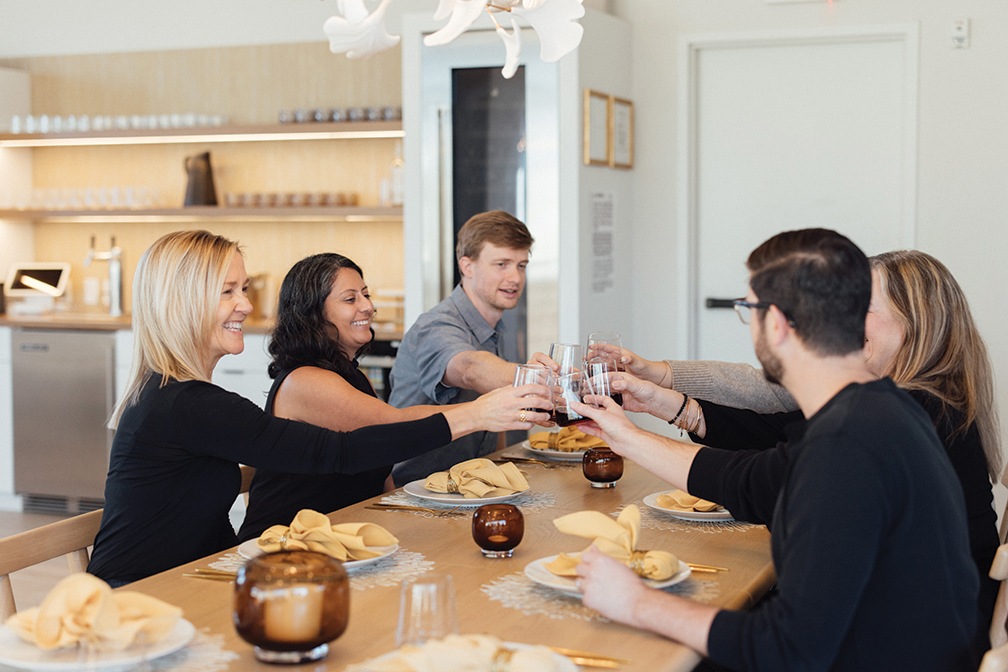
They’re gaining a sense of connection and belonging. So many people feel disconnected today — whether it’s from working remotely, spending more time on phones and computers, or just the general social isolation that has crept into our daily lives over the past few years. At Food Lab, people get to be present with each other, create something with their hands, share a meal, and feel part of something. That experience of cooking and eating together helps rebuild confidence, community, and genuine human connection that we desperately need!
 You’ve spent years observing how people behave around food. What’s something subtle you’ve noticed about human connection that most people overlook?
I’m not sure it’s completely overlooked, but something I notice all the time is how quickly people begin to share personal stories when food is involved. Someone will say, “My grandmother was from Italy and made it like this,” or “My mom used to cook this for me when I was little,” or even “I love being able to cook here because at home my dad always takes over the kitchen.” Food seems to unlock memories and identity in a very natural way.
People almost always have a story connected to what they’re cooking — whether it’s rooted in culture, tied to a childhood experience, or something they recently discovered at a favorite restaurant. They’re also incredibly willing to share those stories with each other. Even outside of class, when I tell someone what Food Lab is — whether it’s an internet technician or an insurance salesperson — the conversation quickly turns into them telling me about their favorite place to eat or something they love to cook. Food really does feel like a universal language that creates instant connection.
 As a founder, how do you balance being the visionary with letting your team and the experience evolve beyond you?
Hiring the right people makes letting go of control much easier. I’ve learned that if you hire people who can do parts of the job better than you, and they understand the vision and where you’re headed, it becomes much more comfortable to step back. I try to lay the groundwork, define the direction, and set some of the key milestones — but then give the team room to figure things out along the way. Just like in cooking, and in many things in life, you learn the most from making mistakes. Sometimes that means getting a little lost, and that’s okay. A lot of the best ideas come from those moments, and part of my role now is recognizing and cultivating them.
Community” is a word we hear often, but at Food Lab, it feels tangible. How do you bring that idea to life in a way that people can actually feel?
It really comes down to bringing people together in a meaningful way. When people cook side by side, share a table, and create something with their hands, connection happens naturally. We focus on designing experiences that make it easy for guests to talk, collaborate, and feel comfortable — not just learn a recipe. That’s when community stops being an idea and becomes something you can actually feel in the room.
You’ve described yourself as someone who thrives in the learning phase. What’s a lesson from opening the Denver location that changed how you think about the business?
Opening a second location taught me very clearly that there is only one of me — and that person also has a family and a life outside of work. Moving from one location to two forced me to become much more organized and intentional. I can’t step in everywhere or solve every problem in real time. It also pushed me to pay attention to what makes Denver different from Boulder and to let each location develop its own personality within the larger vision.
Food Lab sits at the intersection of education, and entertainment. Do you see yourself more as a chef, a teacher, or something else entirely?
At this point I see myself as a businessperson who happens to love cooking. I spent many years teaching and being very hands-on in the kitchen, but now most of my energy goes into building and shaping the business itself. That’s the part I find most exciting right now.
What’s a moment, maybe small, maybe unexpected, that made you think, “Okay, this is exactly why I built this”?
Most of those moments are actually very small. I love watching the kids learn to cook and be amazed at the outcome. It might be seeing a group of strangers laughing together over a cutting board, or watching someone realize they can do something in the kitchen they didn’t think they could. It’s rarely one big milestone it’s the accumulation of those everyday moments that reminds me why this exists. We one time had a guest see themselves with their late dad in a promo picture and called to ask for the photo and told us it meant so much because that was a great memory she still had of him. The little things are big.
You’ve built this as a woman-owned, self-funded business over time. What part of that journey shaped you the most, but people wouldn’t see from the outside?
Being told that it wouldn’t work. Hearing that forced me to become more resilient and more certain about what I was building. A lot of the growth happened quietly — in persistence, in figuring things out without a roadmap, and in continuing to move forward even when the outcome wasn’t guaranteed.
If Food Lab continues to grow (locations three, four, five…), what’s the one thing you would protect at all costs?
My sanity. Growth only matters if it’s sustainable. Protecting my own balance and clarity allows me to make better decisions for the business and for the people in it.
To learn more about Food Lab, their classes, team and private events and more, visit foodlabinc.com or in person at 1230 S. Pearl Street in Platt Park.