
BY SHALEEN DESTEFANO
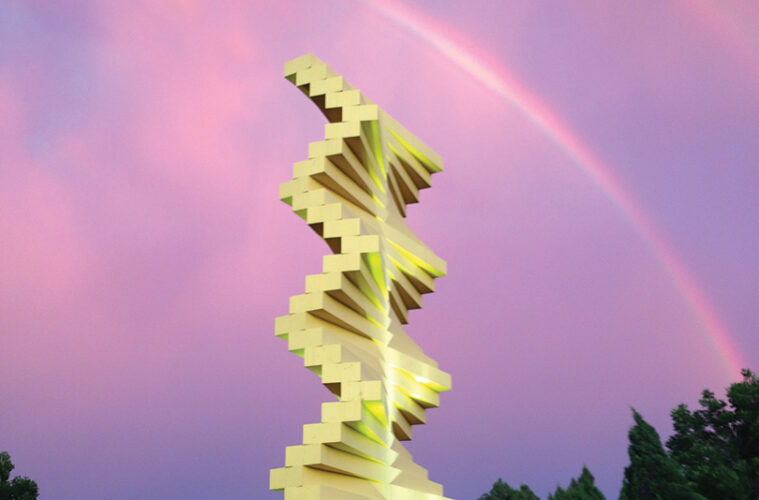
You know it when you see it, the towering canary-yellow sculpture along South Broadway, visible from I-25 and passed by countless times on our daily drives. Herbert Bayer’s Articulated Wall has long served as an unofficial welcome sign to the Denver Design District, a landmark many of us recognize without ever really stopping in. But things are shifting. Beyond that iconic splash of yellow, the Denver Design District is evolving, with new energy, fresh experiences and thoughtful changes taking shape. It’s familiar yet new, a creative heartbeat on Broadway with fresh energy that’s worth a closer look.
 The Denver Design District has been a cornerstone of the city’s design community for decades. How would you describe the district’s origins, and what were the turning points that shaped it into what it is today?
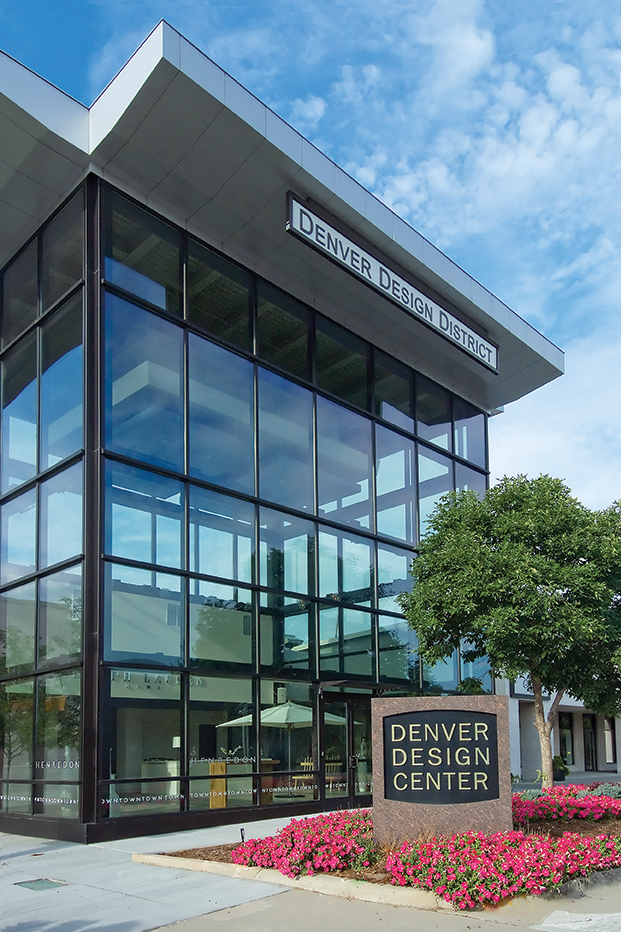
The roots of the Denver Design District (DDD) stretch back more than forty years, beginning with the opening of the Denver Design Center® to serve the Rocky Mountain Region’s growing design community. A few years later, the addition of The Collection® expanded those resources and formally established the Denver Design District®, strengthening its role as a centralized destination for the trade. From the start, the District was built on the idea of connection, bringing designers, showrooms, and manufacturers together in one concentrated, design-forward environment.
Over time, key turning points reflected both industry shifts and Denver’s broader growth. As the city’s creative culture expanded, so did the District’s vision. What began as a trade-focused hub for luxury interiors gradually evolved into a more accessible destination for designers and consumers alike. Today’s brand refresh represents the next major milestone: honoring a rich legacy while committing to a future that embraces design, art, dining, and culture as interconnected experiences open to everyone.
 The District is known for its curated mix of showrooms and its strong connection to Denver’s design professionals. How has that mix evolved over the years, and what do you feel defines the district’s identity now?
The District has always been carefully curated, but its mix has evolved to reflect how design is applied and experienced today. Longstanding, respected showrooms remain the foundation, providing continuity and expertise, while new brands and creative partners bring fresh perspectives and energy. Recent additions such as Phillip Jeffries wallcoverings, Dell Anno Brazilian cabinetry, and Fascination Street Fine Art Gallery, along with upcoming showrooms like Verellen Belgian furniture and Romo fabrics, reflect a broader, more global approach to design.
What defines the DDD now is its openness. It remains deeply connected to the trade, but it’s also more dynamic, welcoming consumers, creatives, and the design-curious alongside professionals. The identity is one of thoughtful evolution: a place where legacy and innovation coexist.
With such a wide range of showrooms representing furniture, textiles, lighting, and more, what current offerings or design perspectives are you most excited about?
There’s an exciting sense of momentum across the District right now. We’re seeing a renewed focus on craftsmanship, high-quality materials, sustainability, and timeless design. Textile and wallcovering brands are pushing creative boundaries, while furniture and lighting showrooms are leaning into human-centered and biophilic design.
We’re also energized by the increasing presence of art and global design perspectives. Fine art, décor, and curated collections are becoming integral to the design conversation, offering designers and consumers a more holistic view of how spaces come together.
 Denver’s design landscape has grown rapidly. How does the District support designers, architects, and trade professionals as their needs shift and expand?
The District serves as both a foundation and a catalyst for the design community. By offering a comprehensive collection of high-end showrooms, designers can efficiently and seamlessly source product for their clients. Beyond physical resources, the District supports professionals through events, markets, showroom programming, educational and networking opportunities, that encourage professional growth and connection. The priority is to remain a trusted, evolving resource for the design community in the Rocky Mountain Region.
Showrooms today are blending physical spaces with digital tools in new ways. How is the district helping retailers and designers innovate their showroom experience?
With Interior Design brands having shoppable websites and other digital tools, why is it important for shoppers to physically visit and shop at the DDD Showrooms. (can we use this question instead?)
Even with the growth of shoppable websites and digital design tools, physically visiting the Denver Design District showrooms remains essential because design is a sensory, collaborative process that simply can’t be replicated online. Seeing products in person allows shoppers and designers to truly understand scale, texture, color, craftsmanship, and quality, details that are critical when choosing high-end pieces for a home or project.
The DDD showrooms are intentionally curated environments where products are displayed as part of a larger design story, not just as individual items. Visiting in person encourages discovery and inspiration in a way digital platforms can’t capture. Just as important, shoppers gain access to the expertise of showroom teams who guide the process, answer questions, and help translate ideas into finished spaces. Digital tools may start the conversation, but the showroom experience is where confident, informed design decisions are made.
There’s a lot of excitement around the District’s long-term vision. Can you share what’s ahead in terms of expansion or redevelopment? What changes can Denver expect to see in the next few years?
The brand refresh marks a new chapter for the DDD and sets the stage for thoughtful growth. Visitors can expect more pop-ups, art installations, and new culinary offerings, like the anticipated Mother Other restaurant and the weekly indoor winter market hosted by A Tavola Denver. The vision is a vibrant and welcoming location that continues to elevate, while staying true to its design-driven roots that anchor the neighborhood.
Growth often comes with conversations around neighborhood fit and community impact. How are you approaching expansion in a way that complements the surrounding area and remains mindful of the community?
Thoughtful integration is a priority. The District’s growth is guided by curation rather than scale, ensuring that new additions feel intentional and complementary to the surrounding neighborhood. By blending design with dining, art, and community programming, the District becomes a place that invites people in rather than standing apart. We’re focused on creating an environment that enhances the area culturally and economically, supporting local businesses, celebrating creativity, and offering experiences that feel authentic.
For our readers who may know the District by name but haven’t visited recently: what makes this moment a particularly exciting time to rediscover Denver Design District?
This moment marks the beginning of a new chapter for the Denver Design District. The launch of a bold new brand identity reflects a broader evolution in how the District shows up for Denver and the Rocky Mountain Region. One that builds on more than forty years of design leadership while looking firmly toward the future. The refreshed visual language is inspired by modernist principles and the legacy of our landmark, Herbert Bayer’s big yellow “Articulated Wall” sculpture. The District is not static, but continually evolving alongside the creative community it serves.
Beyond the visual transformation, the District is expanding its role as a cultural destination. New showrooms, art experiences, culinary concepts, and collaborative programming are coming together to create a more dynamic, immersive environment. It’s still the trusted hub for design professionals, but it’s also becoming a place where design, culture, and everyday life intersect. For anyone who hasn’t visited recently, the DDD is alive, intentional, and vibrant. Now is the ideal time to rediscover the Denver Design District.
To learn more about the Denver Design District and what is on the horizon, visit www.denverdesign.com.