
BY SHALEEN DESTEFANO
There’s a rare kind of quiet power to the work of Matty Miller, a stillness born deep in wild landscapes, whispered through paint and pigment. Based in Colorado Matty crafts layered, contemplative art that draws on the hush of nature, and the delicate pulse of the everyday. Her paintings are like gentle invitations to slow down, and breathe deep. Raised between the rolling hills outside NYC and the open skies of New Mexico, and shaped by years of pilgrimage from silent forested valleys to desert horizons, Matty builds worlds rooted in reverence, intuition, and spaciousness. Her work doesn’t shout, it lingers. We sat down with Matty to learn how she transforms the fleeting beauty of nature into pieces that feel timeless.
 Your paintings often begin with an experience in nature. Can you walk us through a recent moment outdoors that stayed with you long enough to become a piece in your studio?
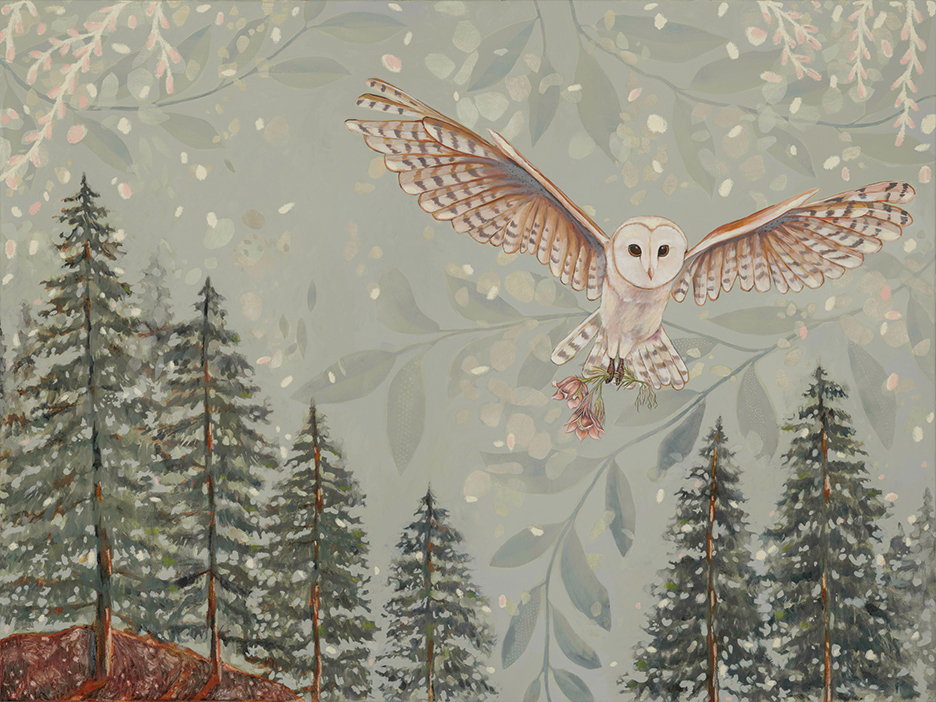
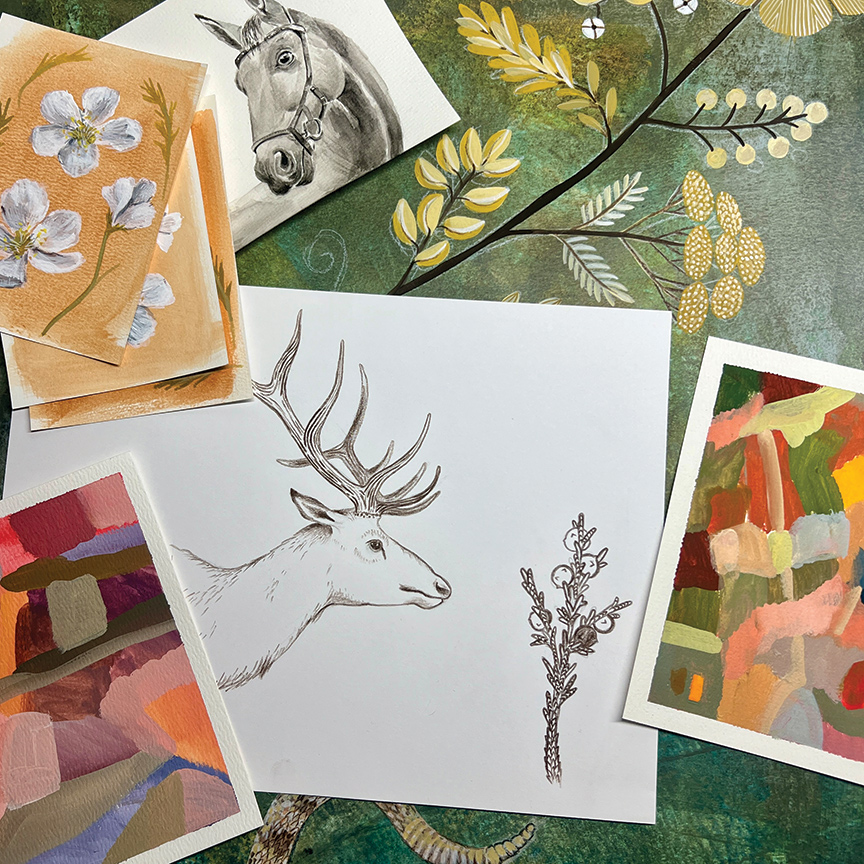
Earlier this year I went on a self-guided art and meditation retreat at Mountain Water Ranch in the Huerfano Valley. I spent time each day walking the land… noticing what was dormant, taking in meadow smells, spotting wildlife, and feeling the texture of the dirt underfoot. I started sketching plants I came across, paying attention to their shapes and how they held themselves in the cold season.
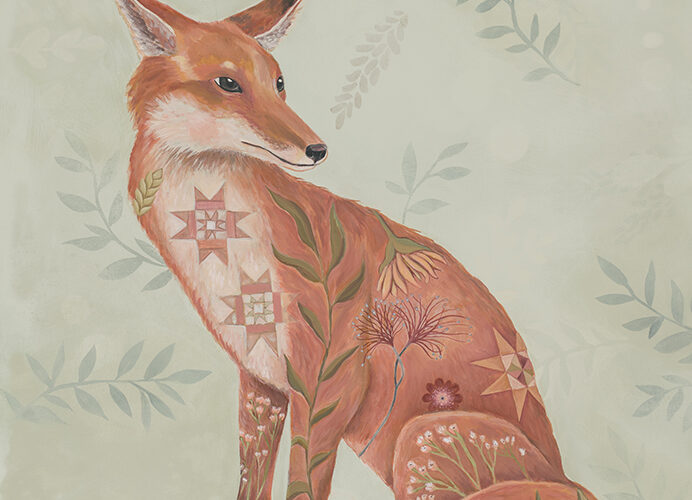
Back in the studio, those sketches became a starting point. I researched the plants and began abstracting their forms into motifs inspired by both Southwestern decorative arts and the plants’ adaptations—like grasses with long roots reaching deep aquifers.
That time spent in aimless wandering, rooted in Taoist practice, became the seed for two paintings so far: Chamisa and Bouteloua. Each piece includes a “resting space” in the composition… a place for the eye and mind to pause. The intention is to deepen connection to place and honor the biodiversity of the land that inspired them.
 Your work leans into symbolism, restraint, and intentional color. How do you decide which motifs or palettes belong in a painting? Does that choice feel more conceptual or instinct-driven?
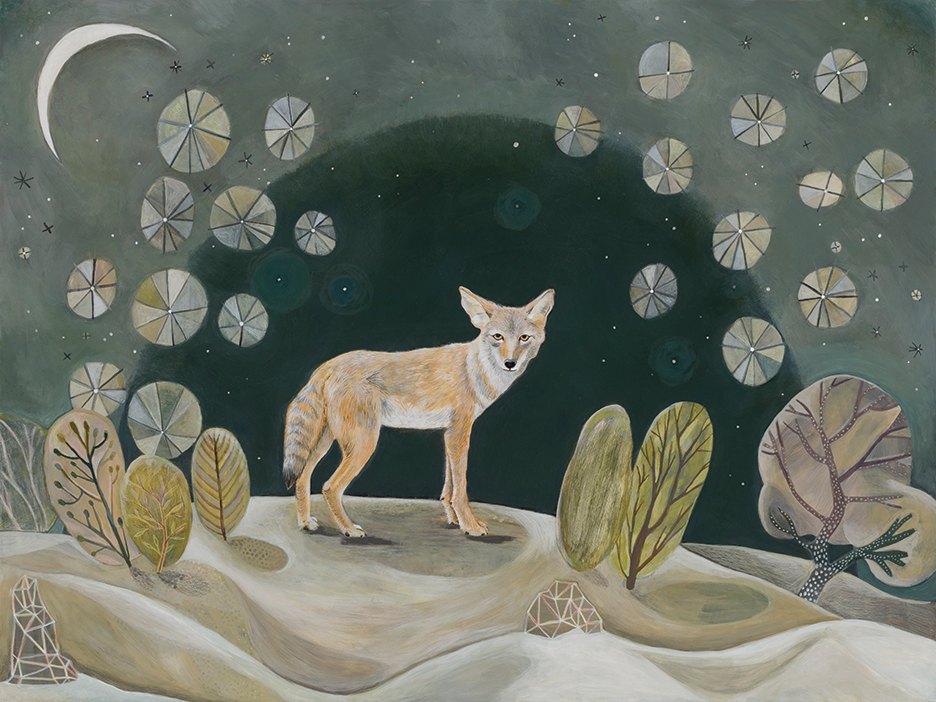
I’m fascinated by the luminous, silvery blue of sagebrush, and in many ways my color palette is rooted in the landscapes I spend time in. I often find myself in mountains, valleys, and meadows that at first glance seem barren, but once my eyes settle in, I suddenly notice the rich range of colors around me. I’m thinking of plants like coyote willow that shift into beautiful maroons and ochres through the seasons, or the variety of grasses that span an entire spectrum but stay soft and muted. I feel that this muted palette lends itself to a willingness to sit with vulnerability… a visibility around the many seasons of life.
A lot of my motifs come from those kinds of observations—colors or plants that catch my attention and stay with me long enough to feel symbolic. Sometimes it’s an encounter with wildlife that feels meaningful or synchronous. I love using decorative motifs borrowed from fiber arts because they reference a slower pace of life, where we take the time to make and mend. Often this has been women’s work… repetitive manual labor tied to nurturing space and our physical belongings as an act of love and care. I’m drawn to folk art traditions from around the world—visual symbols that repeat across cultures, and the anthropological symbols people have created in direct response to their landscapes. I’m trying to discover my own personal symbols in that same authentic way, by being present with what’s happening around me.
All of this comes into play once I start building the composition itself. I’m really interested in the contrast between the depth of figurative work—rendered with light and shadow—and the flatness of decorative or folk art. I’m often trying to merge the two to see how they interact.
 You’ve described yourself as someone deeply attuned to emotion and sensation. How does that sensitivity influence your process, especially when you’re creating in a world that can feel overstimulating?
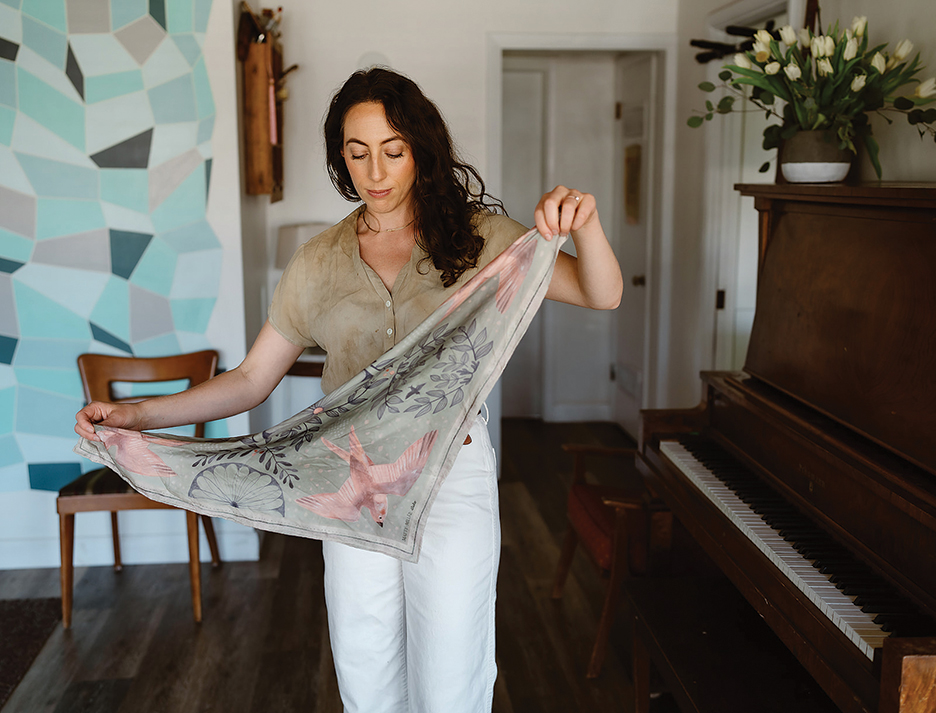
My art practice began when I was a teenager, before I had the language for why it felt so essential. There’s a lot of research now showing how grounding it is to use our hands to create something. Painting brings up so many things for me, but it also re-centers my nervous system… it gets me out of my head, out of the endless to-do lists, and into something small and concrete. I’ve become more sensitive to sound and energy—or maybe just more willing to acknowledge that sensitivity—and the art-making itself helps me slow down and integrate everything that’s happening around me. In many ways, it creates space to reflect, to integrate, and to make meaning in a world that moves fast.
You’ve taken some incredible journeys, from long pilgrimages in Spain to immersive experiences with animals and landscapes. Is there one transformative adventure that continues to echo in your current work?
Sometimes I don’t understand how certain experiences are threaded into my work until a painting or series is well underway and I’m reflecting on it. There are definitely moments from my past that still offer rich imagery—often subconsciously—coming back in dreams or in sketches twenty years later. I’m currently working on a series of portal paintings shaped by doorway forms borrowed from sacred architecture, acting as entrances into the landscape as contemplative space.
As I played with those shapes, I realized some of the forms echoed arches I saw when I spent time living in central Turkey. I came across Byzantine icons carved and painted onto cave walls, saw Ottoman architecture and underground cities seven stories deep, and rows of arch-shaped pigeon roosts carved into rock walls throughout the villages. I was living in a cave during that time, working with horses on a ranch carved into the rockbed, and I think those shapes settled into my visual vocabulary. Those experiences continue to echo in my work in ways I couldn’t have anticipated, and I hope the magic of those travels comes through in my art.
 You’re both an artist and an educator. How does teaching feed your creative practice, and in what ways do your students influence the perspectives you bring back into your own studio?
Teaching kids keeps me connected to joy, and I want my students to grow up with a happy, healthy relationship to creativity. I meet so many adults who picked up negative beliefs from early art experiences, so I try to build the opposite… a sense of play, confidence, and curiosity.
Teaching also pushes me to explore new ways of working—I developed a small ceramics practice through my classes, and I’ve fallen in love with the possibilities of paper mâché. My students influence me with their hunger for making.
One of my favorite times of year is hosting summer art camp in my backyard. Each week has a theme, and we spend hours making art outdoors. Being surrounded by kids so deeply engaged reminds me again and again of the healing qualities of art at any age.
A thread of hope and authenticity runs through your work. What does that mission look like in everyday life?
I think the way I live and the way I paint are pretty intertwined.
Continued on page 25
Continued from page 21
I try to stay present with small moments of beauty, be honest about what I’m feeling, and move through the world with a sense of curiosity. My work is meant to invite pause, with a touch of magical realism that often reminds people of places they’ve loved or moments they haven’t thought about in years.
In life, I try to connect genuinely and share what’s real with my community. I think many of us are navigating deeper spiritual questions, and there’s something hopeful about sharing the practices that keep us going. I try to cultivate community with fellow artists and look to nature for metaphor, pattern, and simple reminders to keep going.
Where can we find your work and what is on the horizon for you?
My work is always available on my website, including original paintings and commission opportunities. I always sell prints through my website and through a number of retail shops, both locally and elsewhere.
I’ll be part of a group show this spring in Boulder focused on Public Lands Advocacy Through Art, and I have collaborations in the works with Yellowstone.
I’ll also be at the Denver Winter Market this month and a number of art festivals around the Southwest in 2026.
Each summer I run art camps for kids in my backyard studio—registration opens in January. Reach out anytime to learn more about summer camps or private lesson opportunities. And if you’d like to stay up to date on new work, events, and behind-the-scenes studio life, you can join my monthly newsletter.
Thank you for sharing your story with our readers, Matty. To view Matty’s vast portfolio, visit mattymiller.com.