
BY SHALEEN DESTEFANO
There’s an immediate tension in Benjamin Stanford’s work. One that sits between realism and the surreal, intimacy and unease, stillness and movement. Through meticulously rendered figures, unexpected gestures and striking compositions, the Denver-based painter creates worlds that feel slightly outside of reality. They make you stop. We sat down with Stanford to talk about his journey as an artist, his process and the stories behind his haunting work.
 What did your path to becoming an artist look like? Was art always something you knew you would pursue, or did you find your way to it over time?
I’ve been drawing and creating things my whole life, but it wasn’t until I went off to college that I started to understand what it actually means to pursue art seriously. I’ve always been drawn to the technical challenge of drawing and painting, but also the weight an image can carry. The deeper I got into it, the more I fell in love with it.
Your work has such a strong foundation in realism. What kind of formal training have you had, and what helped shape the technical side of your practice?
My first introduction to painting began at my local community college in my early 20’s. After that, I received a BFA in painting from CSU in Fort Collins, which is where my grasp of the fundamentals really took off. Past that, a lot of my technical education has come from studying historical masterworks, contemporary artists, as well as just practicing relentlessly.
There’s something beautifully surreal about your paintings; the figures feel incredibly real, but the worlds they inhabit don’t always obey reality. How did that visual language develop for you?
It developed slowly from a lot of trial and error. I rarely begin with a completely resolved idea for a painting. I’ll draw, photograph, distort those photographs digitally, and push things around until I feel some kind of kinship with the image.
I don’t necessarily want to understand an image before I paint it. If I can clearly explain everything that’s happening, I lose interest and the ability to pivot. There’s little to discover at that point for me. So while the individual elements are painted very deliberately, the relationships between them aren’t always logical. Any time I can suspend a logical framework for an emotionally charged one, I will.
 Where does a painting usually begin? Is it an image you see in your head, a feeling, a photograph, a pose, something else entirely?
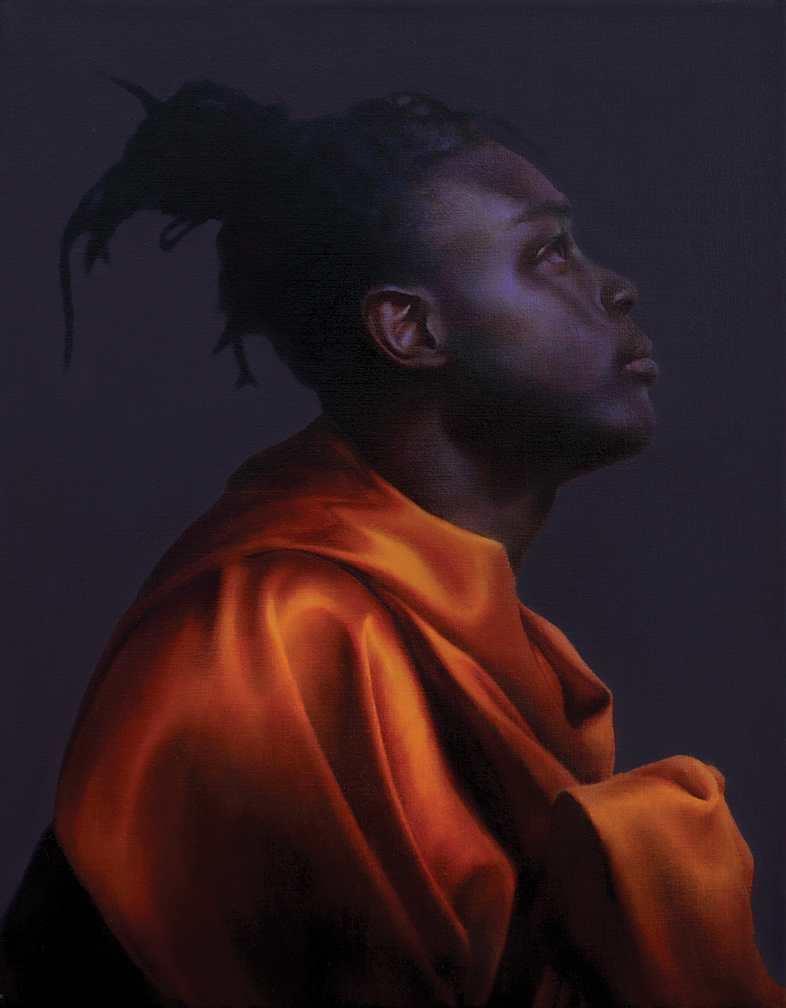
A painting always starts with a fragment rather than a complete idea. It might be a gesture, a pose, a color palette, or just an image that I can’t quite get out of my head. I almost never know where I’m going when I begin, I just need something to spark my interest.
From there I tend to work pretty freely. Drawing, photography and Photoshop are all part of the process. I’ll photograph something specifically, and then completely dismantle it. Things get moved, erased or combined with other elements. So while photography is central in my work, I always try to distance myself from the original reference so something unexpected can happen.
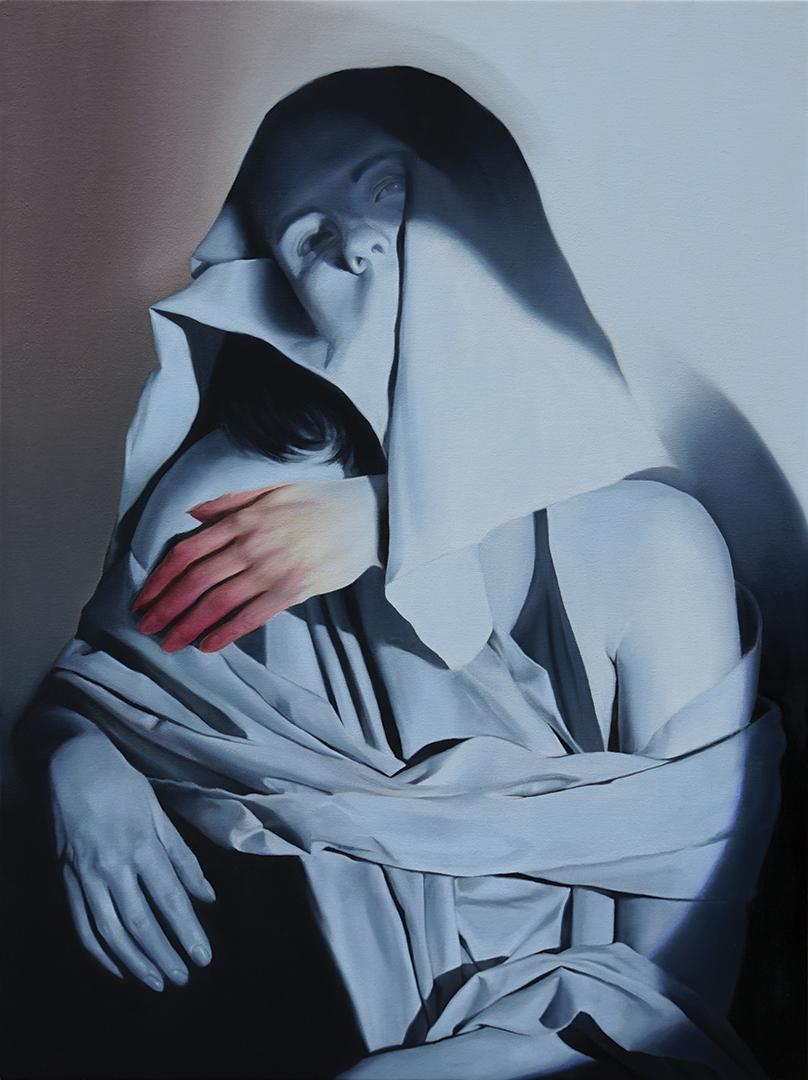
The human body plays such a central role in your work, particularly hands, gestures, touch and the way figures physically relate to one another. What draws you to the body as a way of telling a story?
Because there’s so much implicitly tied up in the figure, it makes for a perfect place to start telling a visual story. We can all relate almost immediately to it. However, I am less interested in using the figure to tell a specific story than I am in using it to create a psychological situation, a kind of happening. I want the viewer to pick up on something emotionally without necessarily being able to exactly explain it. Hands have become especially important for that reason. They’re incredibly expressive, and can take on a narrative all of their own.
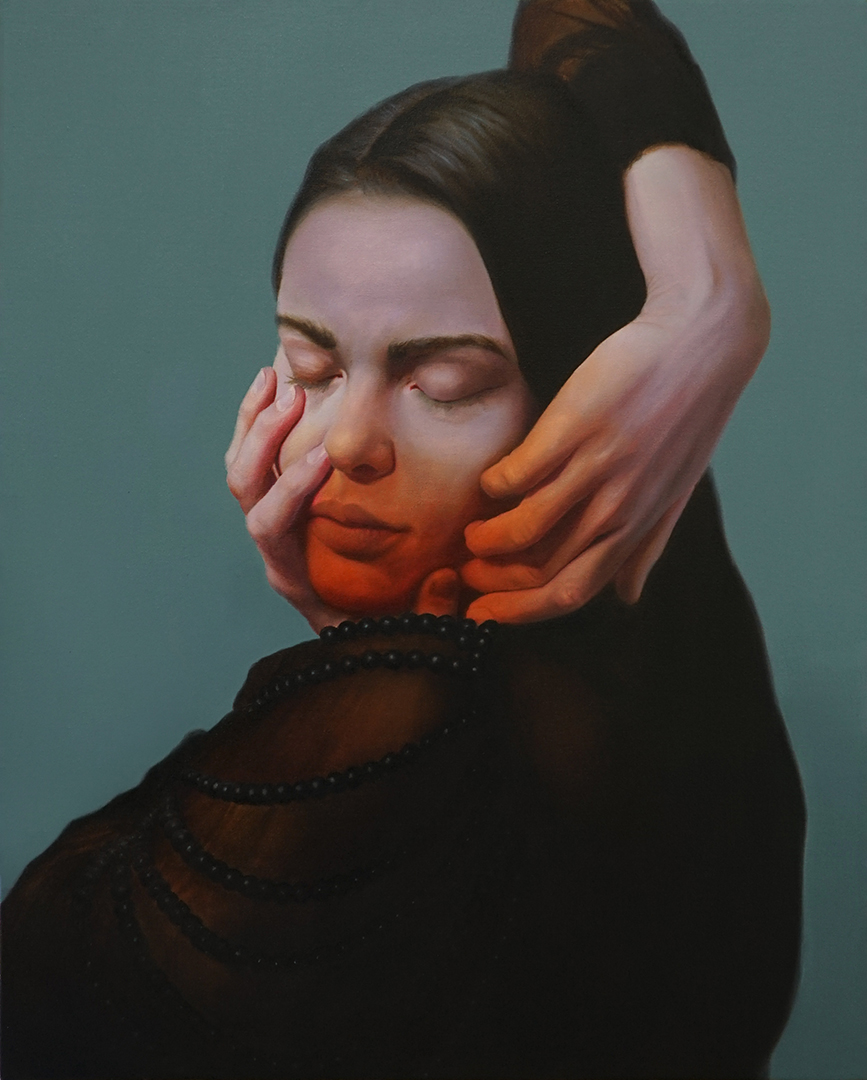
 We’re featuring The Giver on our cover, and there’s something very tender, and almost protective about the hands surrounding the figure. Can you tell us the story behind this piece?
The Giver really grew out of a great photo session I had with a friend of mine, Lindsey. When I start to photograph someone, I rarely go into it with a specific end goal in mind. I’d rather let the image hold a range of possibilities and leave room for the viewer to find their own way through it, just like I do.
While there are soft overtones in her expression, there’s also tension. While clearly the hands are her own, they seem strangely disembodied. As if they are letting something intangible find its way to the surface. Ultimately, that’s what I’m drawn to: lacing disparate elements together and letting them coexist.
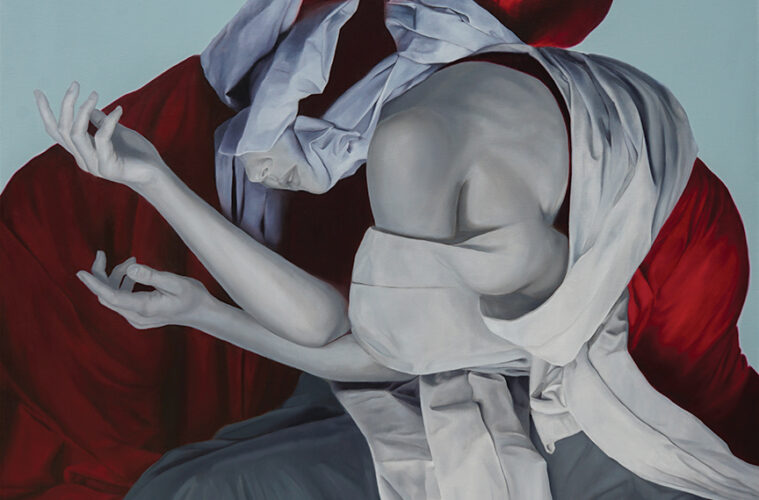
Our center spread features Open Loop, which feels almost choreographed: bodies folding into one another, stark shifts between red and white, and hands that seem to be communicating all on their own. What were you exploring when you created it?
With Open Loop, I was interested in the way the figures felt bound together, almost like a single unit that was beginning to divide. I wanted your eye to be able to move through the painting in a circular way without finding an obvious beginning or end, which eventually led to the title. Like much of my other work, I wanted the figures to read more like shapes or symbols than specific people.
Where do you find inspiration?
I’m constantly looking backward and forward at the same time. I recently had the opportunity to travel to Italy, where I got to spend time with so many incredible masterworks. It was an incredibly powerful experience that’s had me reinvestigating the past in a whole new way.
And while I’m equally interested in a whole host of contemporary artists, lately I’ve been trying to shut off some of my exposure, especially on social media. I’ve felt so bombarded with imagery lately, I’m trying to turn down the volume a bit.
When you look at your work today compared with where you started, what feels like it has changed the most? And what are you curious to explore next?
Compared to where I started it’s night and day. I’m still searching for different ways to push my own limits and go to places that might feel uncomfortable. When I started out, I wasn’t as comfortable with taking risks, and letting my artwork evolve as it needed to.
While I’ve grown an immense amount with my technical skill, I still have to fight hard to get a painting to a place to where I’m satisfied.
As for what’s next, I’ve been exploring more indirect painting. That is to say painting with multiple layers of transparent colors. It can give a really unique effect that I think will bring out a new dimension of my work.
Where can we see your work?
I’m based here in Denver out of Continuum Art studios where I teach private lessons. I will be showing my art at Holiday Art Salon with Annie Decamp on November 13th through the 15th. My next major showing will be at the Cherry Creek Art Festival in July 2027. The easiest place to keep up with my work is through my website and Instagram. I keep them both updated with new paintings, upcoming shows etc. Website: benjaminstanford.com Instagram: @benjamin_stanford_
Thank you, Benjamin, for taking the time to let us explore your work and process. We are so excited to watch your work bloom.